

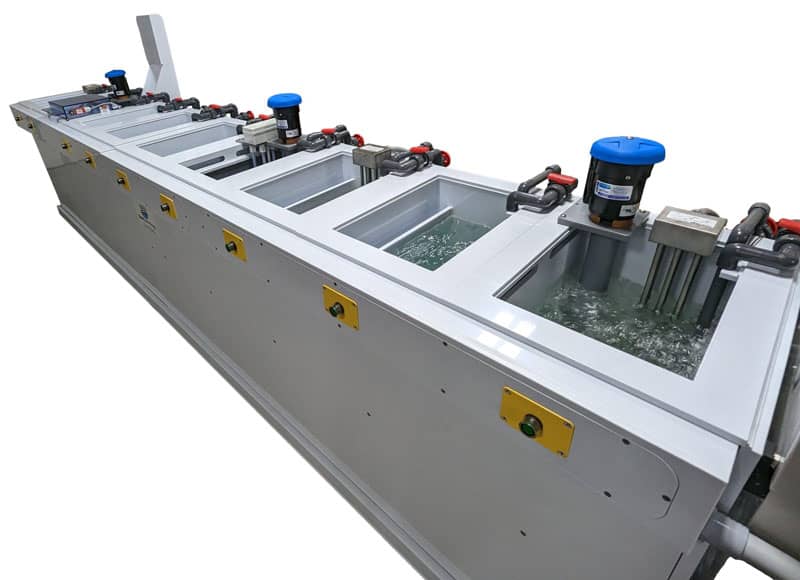
Titanium Anodizing Systems
Improve surface finish on titanium parts with a titanium anodizing system from Best Technology. Whether you need a wear coat (Type 2) or titanium color anodizing (Type 3), our anodizing experts can build a titanium anodizing line for your manufacturing process. Achieve consistent results in your anodizing process with a titanium anodizing system.
Industries Served
Titanium Anodizing Equipment
Best Technology is the industry’s leading supplier of titanium anodizing equipment for manufacturers. All titanium anodizing systems are designed around the customer-specific application and industry specifications such as AMS 2488. Our custom-built titanium anodizing equipment can handle a wide variety of part sizes and throughput requirements.
Equipment for Anodizing Titanium
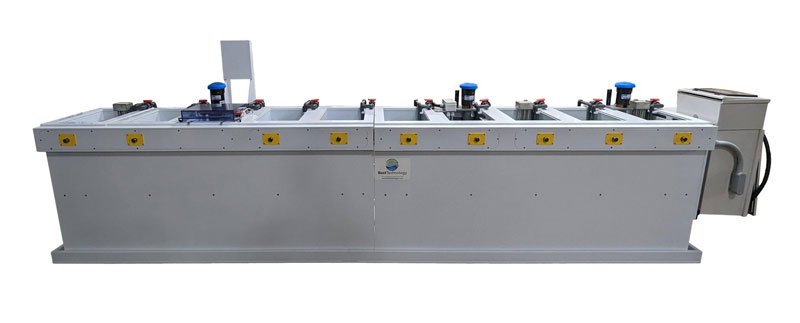
Titanium Anodizing Tank Lines
Our titanium anodizing tank lines offer a flexible solution for applying either Type 2 or Type 3 anodizing, or both, to titanium parts. Anodizing system selection is driven by part size, voltage requirements, production volume and industry specifications. Each anodizing system is built for long-term durability and consistent performance in demanding production environments.
Common Applications for Titanium Anodizing Equipment
- Medical Device: Add lubricity and prevent seizing or friction between sliding titanium surfaces in orthopedic implants with a Type 2 titanium anodizing system.
- Aerospace: For titanium parts exposed to aircraft fluids and extreme temperature, Type 2 titanium anodizing offer corrosion protection.
- Maritime/Naval: For titanium parts exposed to saltwater and high humidity environments, Type 2 titanium provides significant corrosion resistance.
- Dental Implants: Type 2 titanium anodizing provides a wear coat for titanium dental implants.
- Color-coded Medical Parts: Type 3 color anodizing for titanium parts is widely used for quick identification of the appropriate size or orientation for orthopedic implants such as bone screws or bone fixation plates.
Titanium Anodizing Equipment & Process FAQs
-
Does Anodized Titanium Fade?
Anodized titanium is a popular material used in various applications, from aerospace and medical devices to automotive and jewelry. The titanium undergoes an electrochemical process that creates an oxide layer on its surface. For color anodizing applications (Type 3), the color is achieved by altering the thickness of the oxide layer, which can range from about 300 to 550 angstroms (30-55 nanometers). The color in titanium anodizing is not a coating or a paint, nor does it use pigment or dye that can peel or fade over time. The prismatic effect in the oxide layer does not degrade with exposure to UV light. So in that sense, no, anodized titanium does not fade. But the surface of the titanium is subject to abrasion.
Does Anodized Titanium Wear Off?
The oxide layer of color anodized titanium may be scratched or scraped off from the effects of friction and wear, and thus remove the color. Unlike Type 2 titanium anodizing, Type 3 color anodizing does not protect from the effects of wear. Exposure to conditions such as harsh chemicals, abrasives or high temperatures may cause the titanium to lose its color or become discolored. In some cases, repeated small abrasions may lead to what could be mistaken for faded color. Because anodized titanium is biocompatible, it is often used for orthopedic implants. A titanium anodized part will lose its color within 48-72 hours after implantation in the human body. Laser marking the titanium part after color anodizing is an important step for traceability and identification if the implant later needs to be removed. For quality control in manufacturing, a typical guideline for anodized titanium implants is that they must survive three rounds in an autoclave without deterioration of color. -
Passivation vs. Anodizing: Understanding the Differences
In the world of metal surface treatment, passivation and anodizing are two critical processes that enhance the durability and corrosion resistance of metal parts. Understanding the differences between these processes can help industries choose the right method for their specific needs.
What is Passivation?
Passivation is a chemical process that removes free iron from the surface of stainless steel, forming a protective oxide layer. This layer enhances the metal’s corrosion resistance, making it ideal for applications in harsh environments. The process is particularly beneficial for stainless steel passivation, ensuring long-lasting protection against rust and other forms of corrosion.
What is Anodizing?
Anodizing, on the other hand, is an electrolytic process that increases the thickness of the natural oxide layer on the surface of metal parts, typically aluminum. This process not only improves corrosion resistance but also enhances the metal’s aesthetic appeal by allowing for various color finishes. Anodizing is widely used in industries where both durability and appearance are crucial.
Key Differences
While both processes aim to protect metal surfaces, they differ in their applications and outcomes. Passivation is primarily used for stainless steel, focusing on removing contaminants and enhancing corrosion resistance. Anodizing, however, is more versatile, offering both protective and decorative benefits, especially for aluminum and titanium parts.
Choosing the Right Process
The choice between passivation and anodizing depends on the material and the desired outcome. For stainless steel components exposed to corrosive environments, passivation is the preferred method. In contrast, anodizing is ideal for aluminum and titanium parts where both protection and aesthetics are important.
In conclusion, understanding the differences between passivation and anodizing is essential for industries seeking to enhance the performance and longevity of their metal components. By selecting the appropriate process, businesses can ensure their products meet the highest standards of quality and durability.
For more information on how Best Technology can assist with your metal surface treatment needs, visit our Passivation Systems and Surface Finishing Systems pages.
Excellence in Titanium Anodizing Systems
From initial contact to our continued support and service, Best Technology offers over 30 years of industry expertise that can be leveraged to determine the best solution for your titanium anodizing applications.
Contact a titanium anodizing expert to learn more about how you can add a high-quality titanium anodizing system to your manufacturing workflow.

 612.392.2414


