Best Technology

Precision Cleaning, Passivation & Finishing Systems

Call Us612.392.2414
Contact an Expert
  • Equipment
    • Industrial Parts Washers
    • Ultrasonic Cleaning Systems
    • Vapor Degreasing Systems
    • Passivation Equipment
    • Electropolishing Equipment
    • Chem Film Equipment
    • Titanium Anodizing Systems
    • Mass Finishing Machines
    • Automation Systems
    • Wet Benches
    • Specialty & Custom Industrial Process Systems
  • Chemicals
    • Chemicals, Solvents & Fluids
    • BestSolv® Engineered Fluids
    • 3M™ Novec™ Replacement Fluids
    • 3M™ Novec™ Engineered Fluids, Chemicals, & Solvents
    • 3M™ Novec™ HFE Engineered Fluids and PFAS Phase Out
  • Industries
  • Articles
    • FAQ – Frequently Asked Questions
    • Ultrasonic Cleaning
      • How Do Ultrasonic Cleaners Work?
    • Passivation
      • What is Passivation?
    • Electropolishing
      • What is Electropolishing?
    • Surface Finishing
      • What is Alodine® / Chem Film / Chromate Conversion Coating?
      • What is Titanium Anodizing?
    • Industrial Parts Washers
    • Automation Systems
  • Case Studies
    • Industry Applications
    • Industrial Parts Washer Case Studies
    • Passivation Systems Case Studies
    • Part Cleaning Case Studies
    • Part Finishing Equipment Case Studies
    • Ultrasonic Cleaning Systems Case Studies
  • Testimonials
  • About Us
  • Contact Us
  • Equipment
    • Industrial Parts Washers
      • Products
        • Agitated Immersion Heated Parts Washer
        • Automatic Parts Washer System with Conveyor
        • Phosphating Lines
        • Automated Phosphate Lines for High-Volume Powder Coat Pre-Treatment
        • Oil Removal Systems
      • Case Studies
        • Pipe Washing Equipment
        • Designing a Phosphate Line for Today’s Process and Tomorrow’s Needs
        • Machine Shop Parts Washer for True Oil
        • Automotive Parts Washer System
    • Ultrasonic Cleaning Systems
      • Product Information
        • How Clean is Clean?
        • How Do Ultrasonic Cleaners Work?
        • What is an Azeotrope?
      • Products
        • Benchtop Ultrasonic Cleaner
        • Benchtop Ultrasonic Parts Cleaning Multi-Tank Systems
        • Ultrasonic Cleaning Consoles
        • Automated Ultrasonic Parts Cleaning Equipment Wash-Rinse-Dry
        • Automated Ultrasonic Cleaning System for High-Volume Production
        • Large Ultrasonic Parts Cleaner with Agitated Immersion
        • Immersible Ultrasonic Transducers
        • Vapor Degreasing Systems
        • Vapor Degreasers
      • Case Studies
        • Automated Pickling and Cleaning System Case Study
        • Automated Ultrasonic Injection Mold Cleaner System
        • 3D Printer / FDM Parts Post Process Ultrasonic Cleaning
        • Machine Shop Parts Washer for Swiss and CNC Precision Parts
        • Vapor Degreaser For Medical Device Instruments
    • Passivation Equipment
      • Product Information
        • What is Passivation? How Does It Work?
        • Nitric vs. Citric Acid Passivation
        • Passivation with Citric Acid
        • What Is Pickling of Stainless Steel? How Do Descaling, Pickling and Etching Work?
        • Passivation Cost Savings Calculator
      • Products
        • Benchtop Ultrasonic Passivation Equipment
        • Passivation Wet Bench for Citric / Nitric Acid
        • Ultrasonic Automated Passivation Equipment
        • Automated Passivation Systems for High-Volume Production
        • Agitated Immersion Multi-Tank Passivation Systems
        • Salt Fog and Humidity Test Chambers for Reliable Corrosion and Environmental Testing
      • Case Studies
        • Case Study: Bringing Citric Acid Passivation In-House for Stainless Steel Medical Device Parts
        • Automated Ultrasonic Passivation System for Medical Device Parts
        • Cleanroom Space Saving Automated Passivation System
        • Heated Polypropylene Acid Passivation and Rinse Tanks
        • Applicable Articles
    • Electropolishing Equipment
      • Product Information
        • What is Electropolishing? How Does Electropolishing Work?
        • Electropolishing Cycle and Current Calculator
        • Passivation vs. Electropolishing
      • Products
        • Tabletop Electropolishing Equipment & Electropolishing Machines
        • Electropolishing Wet Benches
        • Semi-Automated Electropolishing Systems for High-Volume Production
        • Large Scale Part Electropolishing Systems
      • Case Studies
        • EP System – Open Top Wet Bench with Spray Rinse
    • Surface Finishing Systems
      • Chem Film Equipment / Alodine Lines
        • Chem Film Equipment
        • What is Alodine / Chem Film / Chromate Conversion Coating?
        • Alodine Chem Film Tank Line
        • Ready to Set Up a Chem Film (Alodine) Line?
        • Automated Chem Film (Alodine) Systems
        • Hex Chrome Phase Out and Alternatives for Conversion Coating
        • Salt Fog and Humidity Test Chambers for Reliable Corrosion and Environmental Testing
      • Mass Finishing Machines
        • Centrifugal Barrel Finishing Machines
        • Vibratory Bowl Polishers
      • Titanium Anodizing
        • Titanium Anodizing Systems
        • What is Titanium Anodizing?
        • Titanium Anodizing Equipment
    • Automation Systems
      • Product Information
        • What Is Process Automation for Metal Finishing?
      • Products
        • Rail-Mounted Gantry Crane Automation
        • Automated Passivation Systems for High-Volume Production
        • Automated Ultrasonic Cleaning System for High-Volume Production
        • Automated Chem Film (Alodine) Systems
        • Semi-Automated Electropolishing Systems for High-Volume Production
        • Automated Phosphate Lines for High-Volume Powder Coat Pre-Treatment
        • Ultrasonic Automated Passivation Equipment
      • Case Studies
        • Automated Pickling and Cleaning System Case Study
        • Automated Passivation for High-Volume Production: Case Study
    • Wet Benches
      • Product Information
        • What is a Fume Hood? How Do Fume Hoods Work?
      • Products
        • Fume Hoods
        • Wet Bench for Semiconductor & FM4910 Applications
        • Wet Benches for Citric / Nitric Passivation of Stainless Steel and Titanium
        • Wet Benches for Electropolishing
        • Cascade Overflow Rinse Tanks
        • Quick Dump Rinse Tank
      • Case Studies
        • Semiconductor Chemical Processing Wet Bench and Fume Hood
    • Specialty & Custom Industrial Process Systems
      • Automated Chemical Neutralization Tank Cart
      • Salt Fog and Humidity Test Chambers
      • Vapor and Dryfilm PTFE Coating Systems
      • Heated Hot Air Parts Dryer
      • Solvent Recovery Equipment
    • Process Validation Templates
    • Equipment Financing
  • Chemicals, Solvents & Fluids
    • Chemicals, Solvents & Fluids from Best Technology
    • BestSolv® Engineered Fluids
    • Solvent Cleaning Fluids
      • Solvent Cleaning with BestSolv® Engineered Fluids
      • BestSolv® Alpha
      • BestSolv® Bravo
      • BestSolv® Delta
      • BestSolv® Echo
      • BestSolv® Lima
      • BestSolv® Omega: PFAS Free
      • BestSolv® Omega Plus: PFAS-Free
      • BestSolv® Sierra
      • BestSolv® Theta
      • BestSolv® Zeta: PFAS-Free
      • BestSolv® 5408: Boeing Spec BAC 5408 Qualified Cleaning Solvent
      • BestSolv® 7100
      • BestSolv® 7200
      • BestSolv® 7300
      • BestSolv® 71DE
      • BestSolv® 72DA
      • BestSolv® 72DE
      • BestSolv® 73DE
      • BestSolv® nPB: TCE Replacement
      • Latent Fingerprint Processing with BestSolv® Engineered Fluids
      • What Are Hydrofluoroether (HFE) Fluids?
      • Film Cleaning with BestSolv® 7200
      • Oxygen System and Oxygen Gauge Cleaning Solutions
      • Carrier Fluids for Precision Deposition, Wetting, and Material Transport
      • Choosing the Best Vapor Degreaser Solvent
    • Thermal Management / Heat Transfer Fluids
      • Thermal Management / Heat Transfer with BestSolv® Engineered Fluids
      • BestSolv® Zulu Immersion Cooling Fluid
      • BestSolv® Zulu MAG Magnesium Protection Fluid
      • BestSolv® Zulu FS Fire Suppression Fluid
      • BestSolv® 7100
      • BestSolv® 7200
      • BestSolv® 7300
      • BestSolv® 3283
      • BestSolv® 40
      • BestSolv® Fluids as Coolants for Specialized Machinery and Chiller Systems
      • Magnesium Cover Gas, Re-Engineered for Today
      • Gross Leak Testing for Hermetic Components and Critical Assemblies
    • PFAS-Free Next Generation
      • BestSolv® Omega: PFAS-Free
      • BestSolv® Omega Plus: PFAS-Free
      • BestSolv® Zeta: PFAS-Free
      • PFAS-Free Cleaning Solvents for Vapor Degreasing Applications
      • BestSolv® HFO / HCFO Solvents for Precision Cleaning
    • 3M™ Novec™ Replacements
      • 3M™ Novec™ Replacement Fluids
      • 3M™ Novec™ 7100 Replacements
      • 3M™ Novec™ 7200 Replacement
      • 3M™ Novec™ 7300 Replacement
      • 3M™ Novec™ 71DA Replacements
      • 3M™ Novec™ 71DE Replacement Options
      • 3M™ Novec™ 71IPA Replacements
      • 3M™ Novec™ 72DA Replacements
      • 3M™ Novec™ 72DE Replacements
      • 3M™ Novec™ 73DE Replacement
      • Running Out of 3M™ Novec™ Stock? How to Transition to Your BestSolv® Replacement Path
    • 3M™ Novec™ Engineered Fluids and Fluorinert™ Liquids
      • 3M™ Novec™ Engineered Fluids
      • 3M™ Novec™ HFE Engineered Fluids and PFAS Phase Out
      • 3M™ Novec™ Cleaning Solvents
        • Solvent Cleaning with 3M™ Novec™ Engineered Fluids
        • 3M™ Novec™ 7100
        • 3M™ Novec™ 7200
        • 3M™ Novec™ 7300
        • 3M™ Novec™ 71DA
        • 3M™ Novec™ 71DE
        • 3M™ Novec™ 71IPA
        • 3M™ Novec™ 72DA
        • 3M™ Novec™ 72DE
        • 3M™ Novec™ 73DE
      • 3M™ Fluorinert™ and 3M™ Novec™ Heat Transfer and Thermal Management Fluids
        • 3M™ Fluorinert™ Electronic Liquids for Thermal Management / Heat Transfer
        • 3M™ Novec™ 649
        • 3M™ Novec™ 7100
        • 3M™ Novec™ 7200
        • 3M™ Novec™ 7300
    • Solvent Phase Outs
      • 3M™ Novec™ HFE Engineered Fluids and PFAS Phase Out
      • nPB Replacement
      • TCE Replacement
      • Methylene Chloride Replacement
    • Aqueous Cleaning
      • Aqueous Cleaning Solutions: Alkaline Cleaners
      • How Clean is Clean?
    • Surface Finishing Chemicals
      • CitriSurf Passivation Chemistry for Citric Acid Passivation
      • Electropolishing Solutions: Electrolyte Chemicals
      • Conversion Coating Chemistry
      • Hex Chrome Phase Out and Alternatives for Conversion Coating
  • Industries
  • Customer Testimonials
  • About Us
  • Contact Us
Contact an Expert
home Best Technology / Passivation Equipment & Ultrasonic Passivation Systems for Stainless Steel with Nitric / Citric Acid / What Is Pickling of Stainless Steel? How Do Descaling, Pickling and Etching Work?

What Is Pickling of Stainless Steel? How Do Descaling, Pickling and Etching Work?

Pickling Stainless Steel and Titanium

When stainless steel or titanium is welded, cut, or heat-treated, the surface develops discoloration, oxidation, and surface damage that reduce corrosion resistance. These defects must be removed before passivation, coating, or other finishing steps, or the part will not achieve full corrosion resistance.

Pickling, descaling, and etching are processes used to remove these layers and restore a clean, reactive metal surface.

Table of contents
  1. Pickling Stainless Steel and Titanium
  2. What Is Descaling?
  3. What Is Pickling (Chemical Descaling)?
  4. What Is Etching?
  5. How Do Pickling, Descaling, and Etching Work?
  6. How Do Pickling, Scale Removal, and Etching Relate to Passivation?
    1. Pickling and Passivation Process Order
  7. Common Applications for Pickling, Descaling, and Etching
  8. How Much Material Is Removed by Pickling?
  9. Pickling, Descaling, and Etching as Surface Preparation Steps
  10. Process Steps for Pickling, Chemical Descaling, or Etching
  11. Best Practices for Pickling, Descaling, and Etching
  12. What Equipment Do I Need for Pickling, Descaling or Etching?
    1. Manual Pickling Tank Systems
    2. Rail-Mounted Gantry Automation for High-Volume Pickling and Descaling Systems
  13. How Automated Pickling Systems Improve Process Control and Throughput
    1. Automated Pickling and Passivation System
  14. Weld Scale Removal Solution for Light Scale Removal Jobs
  15. Industry Standards – Pickling / Chemical Descaling Specifications
  16. Work with Best Technology on Pickling and Passivation Systems

Before and After Pickling Stainless Steel

before and after pickling

What Is Descaling?

Descaling is the process of removing the heavy, tightly adherent oxide scale that forms during hot-forming, heat treatment, welding, or other high-temperature operations. These oxide layers must be removed to restore a clean metal surface. Descaling can be done mechanically, chemically, or with a combination of both.

What Is Pickling (Chemical Descaling)?

Pickling is the chemical method of descaling. It uses controlled acid solutions to dissolve oxide scale and a thin layer of the underlying metal. This removes heat tint, weld scale, and the chromium-depleted layer from stainless steel and other alloys, restoring the surface so it is ready for passivation or further finishing.

Because pickling reaches areas that mechanical methods cannot, it is the preferred approach for fabricators who need consistent, uniform results on complex parts. Pickling is typically performed in immersion tanks or with spray/wash systems, using one or more of the following acid solutions:

  • Nitric Acid (HNO₃): A strong oxidizing acid that helps dissolve iron oxides and reoxidize the metal surface, preparing it for passivation.
  • Hydrofluoric Acid (HF): Commonly combined with nitric acid; it dissolves silica and breaks down the chromium-depleted layer, allowing complete removal of scale and heat tint.
  • Sulfuric Acid (H₂SO₄): Used for heavy oxide removal and in applications where rapid scale breakdown is needed; typically applied under controlled temperature and concentration.
  • Phosphoric Acid (H₃PO₄): Effective for light to moderate scale removal and often used when a smoother, less aggressive cleaning action is desired; leaves a passivating phosphate film on certain metals.
  • Citric Acid (C6H8O7): A milder organic acid used for lighter descaling or as a safer alternative where reduced chemical hazard is required.
  • Combination Acid Blends: Many pickling formulations use a controlled mixture of the acids above to balance cleaning power, surface finish, and operator safety.

Best Technology provides the equipment used for safe, controlled pickling operations, allowing manufacturers to achieve repeatable oxide removal without handling chemicals directly.

What Is Etching?

Etching is a controlled chemical attack on the metal surface that removes a thin layer of material to modify surface texture or geometry. Unlike pickling and descaling, which focus on oxide removal, etching is typically used to:

  • Slightly roughen or “activate” the surface for better coating or plating adhesion
  • Create a matte or decorative finish
  • Perform light chemical milling or dimensional adjustment, especially on titanium and high-value components

In stainless steel and titanium finishing, etching can occur as part of a pickling step, where the same acid chemistry both removes the oxide scale and lightly “bites” into the underlying metal.

How Do Pickling, Descaling, and Etching Work?

In Pickling (chemical descaling), metal parts are immersed or sprayed with acid solutions that react with surface oxides. The acids dissolve the scale and a controlled layer of base metal, producing a clean, uniform surface. After treatment, parts are rinsed, neutralized if needed, and ready for passivation or other finishing steps.

Mechanical descaling, by contrast, removes oxide scale through physical means such as blasting, grinding, or brushing.

Etching also uses chemical attack, but its purpose is different. Instead of targeting oxide scale, etching removes a very thin layer of base metal to adjust surface texture, improve coating adhesion, or achieve a specific finish.

For stainless steel, pickling typically uses mixed nitric and hydrofluoric acids. Hydrofluoric acid dissolves the chromium-rich oxide scale and the chromium-depleted layer, while nitric acid re-oxidizes the surface to help restore passivity.

Titanium pickling follows similar principles but uses chemistries and procedures defined in ASTM B600 to safely remove oxides and shop soils without damaging the underlying alloy.

Pickling Removes Weld Scale

Pickling Removes Weld Scale - Chemical Descaling

How Do Pickling, Scale Removal, and Etching Relate to Passivation?

Passivation is a separate chemical step that enhances corrosion resistance by promoting formation of a thin, chromium-rich oxide film on stainless steel. Passivation solutions are typically less aggressive oxidizing acids (for example, nitric or citric-based), designed to remove free iron and promote the passive layer, not to strip scale.

Pickling and Passivation Process Order

  • Pickling (descaling) comes first to remove heat tint, scale, and chromium-depleted layers.
  • Passivation comes after to form a stable, protective passive film.

ASTM A380, Standard Practice for Cleaning, Descaling, Pickling, and Passivation of Stainless Steel Parts, Equipment, and Systems, defines the accepted methods for preparing stainless steel surfaces to achieve corrosion resistance. This specification distinguishes the steps of cleaning and descaling from passivation, establishing clear guidance for when each process is required.

ASTM A380 and related documents explicitly separate “cleaning and descaling” from “passivation,” noting that descaling (including chemical pickling) is needed before passivation if heavy scale or heat tint is present.

In other words, passivation alone cannot fix an improperly pickled surface. If the weld scale is still there, the corrosion problem will come back.

Common Applications for Pickling, Descaling, and Etching

Typical uses across stainless steel and titanium manufacturing include:

  • Removing weld discoloration and heat tint on fabrications and tubing
  • Stripping furnace scale after heat treating or hot forming
  • Preparing stainless steel before passivation in regulated industries
  • Cleaning and activating titanium surfaces prior to passivation, anodizing, or coating (per ASTM B600)
  • Providing a uniform, etched surface for downstream coatings or decorative finishes
  • Removing the recast layer left by Electrical Discharge Machining (EDM), which produces heat-affected oxides and brittle surface residue that must be cleaned before finishing

How Much Material Is Removed by Pickling?

Pickling removes more than just surface oxides. During the process, the acid solution dissolves the high-temperature oxide scale and the chromium-depleted metal layer beneath it. This means a very thin, microscopic layer of base metal is also removed, but only enough to eliminate the damaged surface created by welding, heat treatment, or cutting.

The purpose is not stock removal or dimensional change. The goal is simply to expose clean, sound metal so that passivation and downstream performance are reliable.

Process parameters—acid concentration, temperature, and immersion time—are controlled to remove the damaged layers without over-etching or affecting critical tolerances.

Pickling, Descaling, and Etching as Surface Preparation Steps

In many validated processes, pickling and descaling are not the final finish; they are surface preparation steps:

  • Before passivation, to achieve a clean, fully reactive stainless steel surface
  • Before coating or plating, where a slight etch is desirable for adhesion
  • Before chem film / chromate conversion coating, where oxide-free, active surfaces are required
  • Before automated ultrasonic cleaning sequences, when heavy scale has to be removed first

In this role, pickling and descaling are part of a complete finishing system, not a standalone operation.

Process Steps for Pickling, Chemical Descaling, or Etching

In practice, a chemical pickling or descaling process consists of a defined sequence of steps designed to thoroughly clean the surface, remove scale and heat tint, and prepare the metal for passivation or other finishing operations. Typical process steps include:

  1. Alkaline Cleaning: Parts are first cleaned with an alkaline solution or detergent to remove oils, greases, machining fluids, and loose contaminants from the surface. This prepares the metal for acid exposure by ensuring the surface is free of organics that could interfere with the pickling reaction.
  2. Water Rinse: A thorough rinse with clean water follows the alkaline clean to remove residual detergent and loosened soils. This minimizes carry-over into the acid bath and helps control bath chemistry.
  3. Pickle / Descale / Etch: The core pickling step. This is the stage where controlled acid solutions remove oxide scale and heat tint, exposing a clean, active metal surface for finishing.
    • Typical temperature range: Many pickling operations are conducted between roughly 50–80 °C (122–176 °F), with precise control to balance reaction rate and surface integrity.
    • Immersion time: Acid contact is often limited to 15–30 minutes to avoid over-etching; if scale remains, intermittent agitation or brushing can facilitate removal.
  4. Rinse: After acid treatment, parts are rinsed with clean water to remove residual acid and dissolved contaminants. Multiple rinses are common to prevent carry-over into neutralization steps.
  5. Neutralize: A neutralization step (often an alkaline rinse) brings the surface pH back to neutral and helps stabilize the metal before drying or further finishing. This reduces the risk of staining and prepares the surface for subsequent chemistry.
  6. Other Finishing Processes (if desired): After pickling and neutralization, parts may proceed to passivation, plating, coating, anodizing, or polishing, depending on the application and performance requirements. These downstream steps build on the clean, reactive surface produced by pickling.
  7. Testing / Inspection: Final inspection and testing confirm that surface contaminants and scale have been removed. Common criteria include visual inspection (water-break test), free-iron detection (e.g., copper sulfate test), and other methods specified in ASTM A380.

Best Practices for Pickling, Descaling, and Etching

Good practice helps avoid under- or over-treatment and supports long-term corrosion performance:

  • Thorough pre-cleaning: Remove oils, grease, and shop soils before pickling so the acid can reach the metal surface uniformly.
  • Follow the specification: Use the temperatures, chemistries, and exposure times defined by your process or industry standards. These limits help remove scale without harming the base metal.
  • Avoid over-pickling: Control time and acid strength. Over-pickling can remove more metal than intended and leave a frosted, matte appearance where the surface has been lightly etched.
  • Rinse and neutralize properly: Rinse thoroughly after treatment, and neutralize when required, to prevent acid from remaining in threads, crevices, or blind features.
  • Verify cleanliness: Use visual inspection and a water-break test. A clean surface holds a smooth, continuous film of water, while a contaminated surface causes the water to bead or break into droplets.
  • Ensure proper ventilation: Pickling solutions can generate nitrogen dioxide and other hazardous vapors. Adequate ventilation and fume capture are essential for operator safety.

What Equipment Do I Need for Pickling, Descaling or Etching?

Manual Pickling Tank Systems

For low- to moderate-volume production, manual pickling systems can include:

  • Polypropylene immersion tanks
  • Dedicated tanks for pickling, rinsing, neutralization, and passivation
  • Integrated exhaust and fume hoods for acid vapors
  • Temperature control and agitation to keep chemistry consistent

These systems are suitable for job shops and lower throughput manufacturing.

Rail-Mounted Gantry Automation for High-Volume Pickling and Descaling Systems

For high-volume or regulated environments, automated handling for pickling is often required to meet cycle time, safety, and validation targets. Best Technology’s rail-mounted gantry automation systems move baskets or fixtures through each stage of the process with precise timing and minimal operator contact.

How Automated Pickling Systems Improve Process Control and Throughput

How Automated Pickling Systems Improve Process Control and Throughput.

In a pickling / descaling / passivation line, automation can:

  • Control immersion times and transfer delays precisely
  • Sequence alkaline cleaning, pickling, rinsing, passivation, and final rinses
  • Support multi-basket operation for high throughput
  • Integrate with data collection and recipe control for validated processes

Automated Pickling and Passivation System
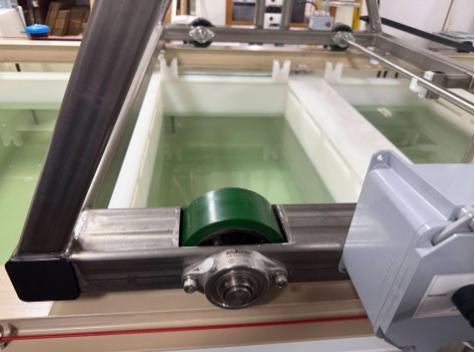
Pickling and passivation tanks with rail-mounted gantry
A rail-mounted gantry moves baskets smoothly between pickling, rinsing, and passivation tanks to ensure precise immersion times and minimal operator handling.
Heavy-duty process basket for automated pickling.
Heavy-duty process basket designed for automated pickling lines. Standard baskets support up to 300 lbs. per load, with optional custom builds available for applications requiring up to 1,000 lbs. per cycle.

You can see examples of this approach in our automation product family:

  • Case Study: Automated Pickling and Ultrasonic Cleaning System 
  • Rail-Mounted Gantry Automation 
  • Automated Passivation Systems for High-Volume Production 
  • Case Study: Automated High-Volume Passivation 
  • Automated Ultrasonic Cleaning for High-Volume Production 
  • Automated Chem Film

These systems use the same automation platform across pickling, passivation, ultrasonic cleaning, and chem film, so a pickling stage can be integrated into a larger, multi-process finishing cell.

Weld Scale Removal Solution for Light Scale Removal Jobs with Weld Wizard™

If your operation requires a chemical solution for weld discoloration removal, Best Technology also offers Weld Wizard™, a low-hazard weld-etching solution from Stellar Solutions. Weld Wizard™ is formulated with sulfonic acid to remove light weld scale and heat tint from stainless steel with minimal metal attack. It can be used in heated immersion tanks, agitated systems, or ultrasonic equipment and provides a practical alternative to traditional nitric-hydrofluoric pickling baths.

Please contact our chemical sales department for a Weld Wizard quote by clicking the “Get a Quote” button, or call 612-392-2414, ext. 2.

Get a Quote

Industry Standards – Pickling / Chemical Descaling Specifications

Looking for a stainless steel pickling or chemical descaling specification? Several industry standards define how to remove heat tint, oxide scale, and the chromium-depleted layer before downstream finishing. The primary standards used for pickling are ASTM A380 for stainless steel and ASTM B600 for titanium.

StandardTitle / Description
ASTM A380Standard Practice for Cleaning, Descaling, and Passivation of Stainless Steel Parts, Equipment, and Systems
Defines chemical descaling (pickling) procedures for removing oxide scale and heat tint.
ASTM B600Standard Guide for Descaling and Cleaning Titanium and Titanium Alloy Surfaces
Outlines pickling chemistry and treatment steps for titanium.
ASTM A967Standard Specification for Chemical Passivation Treatments for Stainless Steel Parts
Notes that pickling or descaling may be required prior to passivation when heavy scale or heat tint is present.
AMS 2700Passivation of Corrosion-Resistant Steels
References descaling/pickling as preparatory steps required before passivation in aerospace applications.

Work with Best Technology on Pickling and Passivation Systems

Pickling, descaling, and etching are critical steps in preparing stainless steel and titanium surfaces for passivation and long-term service. The right combination of chemistry, equipment, and automation ensures consistent, specification-compliant results.

Best Technology designs manual and automated systems that integrate pickling, descaling, ultrasonic cleaning, chem film, and passivation into a single, efficient workflow.

If you are evaluating or upgrading your process for weld scale removal, heat tint removal, or pre-passivation surface preparation, our team can help you define the right system.

Ready to discuss a pickling or passivation system for your operation?

📞 Call us today at (612) 392-2414 or contact us here to speak with an application engineer about your parts, throughput, and specification requirements.
Latest News & Products from Best Technology

BestSolv Novec Replacements

Running Out of 3M™ Novec™ Stock? How to Transition to Your BestSolv® Replacement Path

Don’t let running out of 3M™ Novec™ stock become a concern. As 3M™ Novec™ Engineered Fluids moved toward discontinuation, manufacturers took different approaches to maintaining process continuity. Some transitioned to alternative fluids, while others secured additional inventory and continued operating with the chemistry already qualified in their process. If your operation is still using remaining Novec™ stock, [...]

Read More

Read More

Trusted By Thousands of Customers Since 1992

  • Industrial Parts Washers
    • Products
      • Agitated Immersion Heated Parts Washer
      • Automatic Parts Washer System with Conveyor
      • Phosphating Lines
      • Automated Phosphate Lines for High-Volume Powder Coat Pre-Treatment
      • Oil Removal Systems
    • Case Studies
      • Pipe Washing Equipment
      • Designing a Phosphate Line for Today’s Process and Tomorrow’s Needs
      • Machine Shop Parts Washer for True Oil
      • Automotive Parts Washer System
  • Ultrasonic Cleaning Systems
    • Product Information
      • How Clean is Clean?
      • How Do Ultrasonic Cleaners Work?
      • What is an Azeotrope?
    • Products
      • Benchtop Ultrasonic Cleaner
      • Benchtop Ultrasonic Parts Cleaning Multi-Tank Systems
      • Ultrasonic Cleaning Consoles
      • Automated Ultrasonic Parts Cleaning Equipment Wash-Rinse-Dry
      • Automated Ultrasonic Cleaning System for High-Volume Production
      • Large Ultrasonic Parts Cleaner with Agitated Immersion
      • Immersible Ultrasonic Transducers
      • Vapor Degreasing Systems
      • Vapor Degreasers
    • Case Studies
      • Automated Pickling and Cleaning System Case Study
      • Automated Ultrasonic Injection Mold Cleaner System
      • 3D Printer / FDM Parts Post Process Ultrasonic Cleaning
      • Machine Shop Parts Washer for Swiss and CNC Precision Parts
      • Vapor Degreaser for Medical Device Instruments
  • Passivation Equipment
    • Product Information
      • What is Passivation? How Does It Work?
      • Nitric vs. Citric Acid Passivation
      • Passivation with Citric Acid
      • What Is Pickling of Stainless Steel? How Do Descaling, Pickling and Etching Work?
      • Passivation Cost Savings Calculator
    • Products
      • Benchtop Ultrasonic Passivation Equipment
      • Passivation Wet Bench for Citric / Nitric Acid
      • Ultrasonic Automated Passivation Equipment
      • Automated Passivation Systems for High-Volume Production
      • Agitated Immersion Multi-Tank Passivation Systems
      • Salt Fog and Humidity Test Chambers for Reliable Corrosion and Environmental Testing
    • Case Studies
      • Case Study: Bringing Citric Acid Passivation In-House for Stainless Steel Medical Device Parts
      • Automated Ultrasonic Passivation System for Medical Device Parts
      • Cleanroom Space Saving Automated Passivation System
      • Heated Polypropylene Passivation and Rinse Tanks
      • Applicable Articles
  • Electropolishing Equipment
    • Product Information
      • What is Electropolishing? How Does Electropolishing Work?
      • Electropolishing Cycle and Current Calculator
      • Passivation vs. Electropolishing
    • Products
      • Tabletop Electropolishing Equipment & Electropolishing Machines
      • Electropolishing Wet Benches
      • Semi-Automated Electropolishing Systems for High-Volume Production
      • Large Scale Part Electropolishing Systems
    • Case Studies
      • EP System – Open Top Wet Bench with Spray Rinse
  • Surface Finishing Systems
    • Alodine Lines
      • Chem Film Equipment for Chromate Conversion Coating
      • What is Alodine® / Chem Film / Chromate Conversion Coating?
      • Alodine Chem Film Tank Line
      • Ready to Set Up a Chem Film (Alodine) Line?
      • Automated Chem Film (Alodine) Systems
      • Hex Chrome Phase Out and Alternatives for Conversion Coating
      • Salt Fog and Humidity Test Chambers for Reliable Corrosion and Environmental Testing
    • Mass Finishing Machines
      • Centrifugal Barrel Finishing Machines
      • Vibratory Bowl Polishers
    • Titanium Anodizing
      • Titanium Anodizing Systems
      • What is Titanium Anodizing?
      • Titanium Anodizing Equipment
  • Automation Systems
    • Product Information
      • What Is Process Automation for Metal Finishing?
    • Products
      • Rail-Mounted Gantry Crane Automation
      • Automated Passivation Systems for High-Volume Production
      • Automated Chem Film (Alodine) Systems
      • Semi-Automated Electropolishing Systems for High-Volume Production
      • Automated Ultrasonic Cleaning System for High-Volume Production
      • Automated Phosphate Lines for High-Volume Powder Coat Pre-Treatment
      • Ultrasonic Automated Passivation Equipment
    • Case Studies
      • Automated Passivation for High-Volume Production: Case Study
      • Automated Pickling and Cleaning System Case Study
  • Wet Benches
    • Product Information
      • What is a Fume Hood? How Do Fume Hoods Work?
    • Products
      • Fume Hoods
      • Wet Benches for Semiconductor & FM4910 Applications
      • Wet Benches for Citric / Nitric Passivation of Stainless Steel and Titanium
      • Wet Benches for Electropolishing
      • Cascade Overflow Rinse Tanks
      • Quick Dump Rinse Tank
    • Case Studies
      • Semiconductor Chemical Processing Wet Bench and Fume Hood
  • Specialty & Custom Industrial Process Systems
    • Products
      • Automated Chemical Neutralization Tank Cart
      • Salt Fog and Humidity Test Chambers
      • Vapor and Dryfilm PTFE Coating Systems
      • Heated Hot Air Parts Dryer
      • Solvent Recovery Equipment
  • Chemicals, Solvents & Fluids
    • Precision Cleaning Solvents
      • BestSolv® Engineered Fluids
      • Solvent Cleaning with BestSolv® Engineered Fluids
      • 3M™ Novec™ Replacement Fluids
    • Aqueous Cleaning
      • Aqueous Cleaning Solutions: Alkaline Cleaners
    • Surface Finishing Chemicals
      • CitriSurf Passivation Chemistry for Citric Acid Passivation
      • Electropolishing Solutions: Electrolyte Chemicals
      • Conversion Coating Chemistry
  • Process Validation Templates
  • Equipment Financing
Best Technology applications engineer

Connect with Our
Experts Today!

Ready to boost your manufacturing process efficiency?

Our expert team is just a click away. Reach out now to get personalized advice on choosing the best system for your specific needs. Let's enhance your operations together!

Contact an Expert
Best Technology Inc.

Best Technology Inc.
14040 23rd Avenue N.
Minneapolis, MN 55447

phone icon612.392.2414

Follow Us
  • Facebook icon
  • X icon
  • LinkedIn icon
  • YouTube icon
  • Pinterest icon

Quick Links

  • Product Line Card
  • Case Studies
  • Videos
  • Site Map
  • Equipment Financing
  • Contact Us

Products

  • Industrial Parts Washers
  • Ultrasonic Cleaning Systems
  • Passivation Equipment
  • Electropolishing Equipment
  • Surface Finishing Systems
  • Chemistries, Solvents & Fluids

Industries Served

  • Medical Device
  • Aerospace
  • Electronics
  • Automotive
Contact an Expert

Copyright © 2026 · Best Technology Inc. · Privacy Policy

Precision Cleaning, Passivation & Finishing Systems
Contact an Expert
612.392.2414
  • facebook
  • Twitter
  • LinkedIn
  • YouTube
  • Pinterest

"*" indicates required fields

1Contact Info
2Your Project

Start Here for the Best Solution

Are you looking to purchase equipment?*
Note: We specialize in custom metal finishing equipment and do not offer job shop or contract services.
Best Technology designs custom metal finishing equipment for commercial manufacturing environments. Hobby, student, or consumer projects are not supported.
Are you looking for budgetary pricing or a formal quote?
How soon are you looking to purchase equipment?
Has this project received internal approval at your organization?
Are you currently doing this process in-house or sending it out to a vendor?