Best Technology

Precision Cleaning, Passivation & Finishing Systems

Call Us612.392.2414
Contact an Expert
  • Equipment
    • Industrial Parts Washers
    • Ultrasonic Cleaning Systems
    • Vapor Degreasing Systems
    • Passivation Equipment
    • Electropolishing Equipment
    • Chem Film Equipment
    • Titanium Anodizing Systems
    • Mass Finishing Machines
    • Automation Systems
    • Wet Benches
    • Specialty & Custom Industrial Process Systems
  • Chemicals
    • Chemicals, Solvents & Fluids
    • BestSolv® Engineered Fluids
    • 3M™ Novec™ Replacement Fluids
    • 3M™ Novec™ Engineered Fluids, Chemicals, & Solvents
    • 3M™ Novec™ HFE Engineered Fluids and PFAS Phase Out
  • Industries
  • Articles
    • FAQ – Frequently Asked Questions
    • Ultrasonic Cleaning
      • How Do Ultrasonic Cleaners Work?
    • Passivation
      • What is Passivation?
    • Electropolishing
      • What is Electropolishing?
    • Surface Finishing
      • What is Alodine® / Chem Film / Chromate Conversion Coating?
      • What is Titanium Anodizing?
    • Industrial Parts Washers
    • Automation Systems
  • Case Studies
    • Industry Applications
    • Industrial Parts Washer Case Studies
    • Passivation Systems Case Studies
    • Part Cleaning Case Studies
    • Part Finishing Equipment Case Studies
    • Ultrasonic Cleaning Systems Case Studies
  • Testimonials
  • About Us
  • Contact Us
  • Equipment
    • Industrial Parts Washers
      • Products
        • Agitated Immersion Heated Parts Washer
        • Automatic Parts Washer System with Conveyor
        • Phosphating Lines
        • Automated Phosphate Lines for High-Volume Powder Coat Pre-Treatment
        • Oil Removal Systems
      • Case Studies
        • Pipe Washing Equipment
        • Designing a Phosphate Line for Today’s Process and Tomorrow’s Needs
        • Machine Shop Parts Washer for True Oil
        • Automotive Parts Washer System
    • Ultrasonic Cleaning Systems
      • Product Information
        • How Clean is Clean?
        • How Do Ultrasonic Cleaners Work?
        • What is an Azeotrope?
      • Products
        • Benchtop Ultrasonic Cleaner
        • Benchtop Ultrasonic Parts Cleaning Multi-Tank Systems
        • Ultrasonic Cleaning Consoles
        • Automated Ultrasonic Parts Cleaning Equipment Wash-Rinse-Dry
        • Automated Ultrasonic Cleaning System for High-Volume Production
        • Large Ultrasonic Parts Cleaner with Agitated Immersion
        • Immersible Ultrasonic Transducers
      • Case Studies
        • Automated Pickling and Cleaning System Case Study
        • Automated Ultrasonic Injection Mold Cleaner System
        • 3D Printer / FDM Parts Post Process Ultrasonic Cleaning
        • Machine Shop Parts Washer for Swiss and CNC Precision Parts
    • Vapor Degreasing Systems
      • Product Information
        • What Is Vapor Degreasing?
      • Products
        • Vapor Degreasing Systems
        • Vapor Degreasing Equipment and Ultrasonic Vapor Degreasers
      • Case Studies
        • Vapor Degreaser For Medical Device Instruments
    • Passivation Equipment
      • Product Information
        • What is Passivation? How Does It Work?
        • Nitric vs. Citric Acid Passivation
        • Passivation with Citric Acid
        • What Is Pickling of Stainless Steel? How Do Descaling, Pickling and Etching Work?
        • Passivation Cost Savings Calculator
      • Products
        • Benchtop Ultrasonic Passivation Equipment
        • Passivation Wet Bench for Citric / Nitric Acid
        • Ultrasonic Automated Passivation Equipment
        • Automated Passivation Systems for High-Volume Production
        • Agitated Immersion Multi-Tank Passivation Systems
        • Salt Fog and Humidity Test Chambers for Reliable Corrosion and Environmental Testing
      • Case Studies
        • Case Study: Bringing Citric Acid Passivation In-House for Stainless Steel Medical Device Parts
        • Automated Ultrasonic Passivation System for Medical Device Parts
        • Cleanroom Space Saving Automated Passivation System
        • Heated Polypropylene Acid Passivation and Rinse Tanks
        • Applicable Articles
    • Electropolishing Equipment
      • Product Information
        • What is Electropolishing? How Does Electropolishing Work?
        • Electropolishing Cycle and Current Calculator
        • Passivation vs. Electropolishing
      • Products
        • Tabletop Electropolishing Equipment & Electropolishing Machines
        • Electropolishing Wet Benches
        • Semi-Automated Electropolishing Systems for High-Volume Production
        • Large Scale Part Electropolishing Systems
      • Case Studies
        • EP System – Open Top Wet Bench with Spray Rinse
    • Surface Finishing Systems
      • Chem Film Equipment / Alodine Lines
        • Chem Film Equipment
        • What is Alodine / Chem Film / Chromate Conversion Coating?
        • Alodine Chem Film Tank Line
        • Ready to Set Up a Chem Film (Alodine) Line?
        • Automated Chem Film (Alodine) Systems
        • Hex Chrome Phase Out and Alternatives for Conversion Coating
        • Salt Fog and Humidity Test Chambers for Reliable Corrosion and Environmental Testing
      • Mass Finishing Machines
        • Centrifugal Barrel Finishing Machines
        • Vibratory Bowl Polishers
      • Titanium Anodizing
        • Titanium Anodizing Systems
        • What is Titanium Anodizing?
        • Titanium Anodizing Equipment
    • Automation Systems
      • Product Information
        • What Is Process Automation for Metal Finishing?
      • Products
        • Rail-Mounted Gantry Crane Automation
        • Automated Passivation Systems for High-Volume Production
        • Automated Ultrasonic Cleaning System for High-Volume Production
        • Automated Chem Film (Alodine) Systems
        • Semi-Automated Electropolishing Systems for High-Volume Production
        • Automated Phosphate Lines for High-Volume Powder Coat Pre-Treatment
        • Ultrasonic Automated Passivation Equipment
      • Case Studies
        • Automated Pickling and Cleaning System Case Study
        • Automated Passivation for High-Volume Production: Case Study
    • Wet Benches
      • Product Information
        • What is a Fume Hood? How Do Fume Hoods Work?
      • Products
        • Fume Hoods
        • Wet Bench for Semiconductor & FM4910 Applications
        • Wet Benches for Citric / Nitric Passivation of Stainless Steel and Titanium
        • Wet Benches for Electropolishing
        • Cascade Overflow Rinse Tanks
        • Quick Dump Rinse Tank
      • Case Studies
        • Semiconductor Chemical Processing Wet Bench and Fume Hood
    • Specialty & Custom Industrial Process Systems
      • Automated Chemical Neutralization Tank Cart
      • Salt Fog and Humidity Test Chambers
      • Vapor and Dryfilm PTFE Coating Systems
      • Heated Hot Air Parts Dryer
      • Solvent Recovery Equipment
    • Process Validation Templates
    • Equipment Financing
  • Chemicals, Solvents & Fluids
    • Chemicals, Solvents & Fluids from Best Technology
    • BestSolv® Engineered Fluids
    • Solvent Cleaning Fluids
      • Solvent Cleaning with BestSolv® Engineered Fluids
      • BestSolv® Alpha
      • BestSolv® Bravo
      • BestSolv® Delta
      • BestSolv® Echo
      • BestSolv® Lima
      • BestSolv® Omega: PFAS Free
      • BestSolv® Omega Plus: PFAS-Free
      • BestSolv® Sierra
      • BestSolv® Theta
      • BestSolv® Zeta: PFAS-Free
      • BestSolv® 5408: Boeing Spec BAC 5408 Qualified Cleaning Solvent
      • BestSolv® 7100
      • BestSolv® 7200
      • BestSolv® 7300
      • BestSolv® 71DE
      • BestSolv® 72DA
      • BestSolv® 72DE
      • BestSolv® 73DE
      • BestSolv® nPB: TCE Replacement
      • Latent Fingerprint Processing with BestSolv® Engineered Fluids
      • What Are Hydrofluoroether (HFE) Fluids?
      • Film Cleaning with BestSolv® 7200
      • Oxygen System and Oxygen Gauge Cleaning Solutions
      • Engineered Fluids for Fluid Simulation and Aerospace Vibration Testing
      • Carrier Fluids for Precision Deposition, Wetting, and Material Transport
      • Choosing the Best Vapor Degreaser Solvent
    • Thermal Management / Heat Transfer Fluids
      • Thermal Management / Heat Transfer with BestSolv® Engineered Fluids
      • BestSolv® Zulu Immersion Cooling Fluid
      • BestSolv® Zulu MAG Magnesium Protection Fluid
      • BestSolv® Zulu FS Fire Suppression Fluid
      • BestSolv® 7100
      • BestSolv® 7200
      • BestSolv® 7300
      • BestSolv® 3283
      • BestSolv® 40
      • BestSolv® Fluids as Coolants for Specialized Machinery and Chiller Systems
      • Magnesium Cover Gas, Re-Engineered for Today
      • Gross Leak Testing for Hermetic Components and Critical Assemblies
    • PFAS-Free Next Generation
      • BestSolv® Omega: PFAS-Free
      • BestSolv® Omega Plus: PFAS-Free
      • BestSolv® Zeta: PFAS-Free
      • PFAS-Free Cleaning Solvents for Vapor Degreasing Applications
      • BestSolv® HFO / HCFO Solvents for Precision Cleaning
    • 3M™ Novec™ Replacements
      • 3M™ Novec™ Replacement Fluids
      • 3M™ Novec™ 7100 Replacements
      • 3M™ Novec™ 7200 Replacement
      • 3M™ Novec™ 7300 Replacement
      • 3M™ Novec™ 71DA Replacements
      • 3M™ Novec™ 71DE Replacement Options
      • 3M™ Novec™ 71IPA Replacements
      • 3M™ Novec™ 72DA Replacements
      • 3M™ Novec™ 72DE Replacements
      • 3M™ Novec™ 73DE Replacement
      • Running Out of 3M™ Novec™ Stock? How to Transition to Your BestSolv® Replacement Path
    • 3M™ Novec™ Engineered Fluids and Fluorinert™ Liquids
      • 3M™ Novec™ Engineered Fluids
      • 3M™ Novec™ HFE Engineered Fluids and PFAS Phase Out
      • 3M™ Novec™ Cleaning Solvents
        • Solvent Cleaning with 3M™ Novec™ Engineered Fluids
        • 3M™ Novec™ 7100
        • 3M™ Novec™ 7200
        • 3M™ Novec™ 7300
        • 3M™ Novec™ 71DA
        • 3M™ Novec™ 71DE
        • 3M™ Novec™ 71IPA
        • 3M™ Novec™ 72DA
        • 3M™ Novec™ 72DE
        • 3M™ Novec™ 73DE
      • 3M™ Fluorinert™ and 3M™ Novec™ Heat Transfer and Thermal Management Fluids
        • 3M™ Fluorinert™ Electronic Liquids for Thermal Management / Heat Transfer
        • 3M™ Novec™ 649
        • 3M™ Novec™ 7100
        • 3M™ Novec™ 7200
        • 3M™ Novec™ 7300
    • Solvent Phase Outs
      • 3M™ Novec™ HFE Engineered Fluids and PFAS Phase Out
      • nPB Replacement
      • TCE Replacement
      • Methylene Chloride Replacement
    • Aqueous Cleaning
      • Aqueous Cleaning Solutions: Alkaline Cleaners
      • How Clean is Clean?
    • Surface Finishing Chemicals
      • CitriSurf Passivation Chemistry for Citric Acid Passivation
      • Electropolishing Solutions: Electrolyte Chemicals
      • Conversion Coating Chemistry
      • Hex Chrome Phase Out and Alternatives for Conversion Coating
  • Industries
  • Customer Testimonials
  • About Us
  • Contact Us
Contact an Expert
home Best Technology / BestSolv® Chemicals, Solvents & Fluids / Understanding Kauri-Butanol Value: A Key Indicator in Solvent Cleaning

Understanding Kauri-Butanol Value: A Key Indicator in Solvent Cleaning

Lab test tubes for kauri-butanol value measurement
In industrial solvent cleaning, the effectiveness of a solvent is often measured by its ability to dissolve oils, greases, resins, flux residues, and other contaminants. One important metric used to compare this cleaning strength is the kauri-butanol value, also called Kb value. Understanding kauri-butanol value helps manufacturers choose a solvent that is strong enough to remove the target soil without being too aggressive for the part material.

What Is Kauri-Butanol Value in Solvent Cleaning?

The kauri-butanol value, often abbreviated as Kb value, is a standardized measure of solvent power for hydrocarbon solvents. It is governed by ASTM D1133 and is commonly used to compare how strongly different solvents dissolve oils, resins, and other nonpolar contaminants. In the kauri-butanol test, kauri gum resin is dissolved using butanol as the benchmark solvent, creating a reference point for comparing solvent strength.

A higher kauri-butanol value indicates that the solvent has stronger dissolving power, making it more effective for removing resins, oils, and other nonpolar contaminants. Conversely, a lower kauri-butanol value suggests a milder solvent, which may be preferable for delicate applications where strong solvent action could damage materials or finishes.

The Historical Context of Kauri-Butanol Value

The origins of the kauri-butanol test date back to the 1890s when chemists sought a solvent to liquefy kauri resin for industrial use, particularly in the furniture finishing industry. They discovered that kauri gum was easily dissolved in butyl alcohol (butanol), establishing it as the benchmark kauri-butanol solvent. This historical context underscores the kauri-butanol value test’s longstanding role in evaluating solvent strength.

Today, the kauri-butanol value remains a critical metric for comparing solvents in modern applications such as coatings, adhesives, and precision cleaning. By providing a standardized scale, the kauri-butanol value enables chemists and engineers to select the most appropriate solvent for performance, safety, and compatibility requirements across diverse industries.

Understanding the Kauri-Butanol Value Scale

The result of the kauri-butanol test is a scaleless index, usually referred to as the Kb value. A higher Kb value means the solvent has stronger solvency and is more active in dissolving certain contaminants. Kb values can range from mild solvents in the tens and twenties to stronger solvents with kauri-butanol value ratings in the low hundreds or higher. This scale helps manufacturers compare solvent strength for specific cleaning applications, especially when balancing cleaning performance with material compatibility.

Best Technology offers solvents with Kb (Kauri-Butanol) values in the range from tens to low hundreds in our BestSolv® product line, so you can find the solvent with the cleaning power that you need. Our BestSolv® Sierra has a Kb value of 13, making it suitable for applications requiring gentle cleaning. BestSolv® Omega, on the other hand, offers a kauri-butanol value of 113, for a more aggressive, thorough clean.

A low kauri-butanol value does not automatically mean a solvent is better or worse than a high-Kb solvent. It means the solvent is milder. For delicate plastics, coatings, or sensitive assemblies, a lower Kb value may be preferred. For heavier oils, greases, adhesives, or residues, a higher kauri-butanol value may be needed to achieve the required cleaning result.

Importance of Kauri-Butanol Value in Solvent Cleaning

In precision cleaning, selecting a solvent with the right Kb (Kauri-Butanol) value is crucial for achieving desired results. For example, in the electronics industry, a solvent with a high Kb value is preferred for removing flux residues from circuit boards. Similarly, in the medical device industry, solvents with specific Kb values are chosen to ensure thorough cleaning of surgical instruments. Understanding the Kb value helps ensure effective removal of contaminants without damaging sensitive components.

Factors Influencing Kauri-Butanol Value

Several factors can influence the Kb value of a solvent, including its chemical composition and temperature. Solvents with higher aromatic content typically have higher Kb values, making them more effective in dissolving complex contaminants. Additionally, temperature can affect the kauri-butanol value, with higher temperatures generally increasing a solvent’s dissolving power.

Potential Risks and Considerations

While solvents with higher Kb values can be effective cleaners, they may also pose risks to certain materials, especially some plastics, elastomers, coatings, or delicate finishes. Understanding the kauri-butanol value helps balance cleaning efficiency with material safety. The best solvent is not always the one with the highest Kb value; it is the solvent that removes the target contamination while remaining compatible with the part, process, and equipment.

Talk to a Solvent Cleaning Expert

The kauri-butanol value is a useful metric for optimizing solvent cleaning processes because it helps match solvent strength to the contamination being removed. By selecting solvents with the appropriate Kb value, manufacturers can improve cleaning performance while considering material compatibility, safety, vapor degreaser operation, and process requirements. For more information on precision cleaning solutions, explore our range of precision cleaning solvents and vapor degreasing equipment.

If you’re looking to enhance your cleaning processes with the right solvents, contact Best Technology today. Our experts can guide you in selecting the best solutions for your specific needs.
Latest News & Products from Best Technology

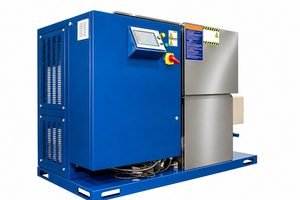
Industrial vapor-only degreasing machine

Vapor Degreasing Equipment and Ultrasonic Vapor Degreasers

Industrial Precision Cleaning Solutions Best Technology supplies industrial vapor degreasing equipment for manufacturers requiring reliable, repeatable precision cleaning. Our vapor degreasers are configured around each customer's application, including part dimensions, contaminants, cleaning requirements, solvent selection, and production throughput. [joli-toc] We offer equipment solutions ranging from [...]

Read More

Read More

Trusted By Thousands of Customers Since 1992

  • BestSolv® Engineered Fluids: 3M™ Novec™ Replacement
    • BestSolv® Engineered Fluids
    • Solvent Cleaning with BestSolv® Engineered Fluids
      • BestSolv® Alpha
      • BestSolv® Bravo
      • BestSolv® Delta
      • BestSolv® Echo
      • BestSolv® Lima
      • BestSolv® Omega: PFAS-Free
      • BestSolv® Omega Plus: PFAS-Free
      • BestSolv® Sierra
      • BestSolv® Theta
      • BestSolv® Zeta: PFAS-Free
      • BestSolv® 5408: Boeing Spec BAC 5408 Qualified Cleaning Solvent
      • BestSolv® 7100
      • BestSolv® 7200
      • BestSolv® 7300
      • BestSolv® 71DA
      • BestSolv® 71DE
      • BestSolv® 71IPA
      • BestSolv® 72DA
      • BestSolv® 72DE
      • BestSolv® 73DE
      • BestSolv® nPB: TCE Replacement
      • Latent Fingerprint Processing with BestSolv® Engineered Fluids
      • What Are Hydrofluoroether (HFE) Fluids?
      • Film Cleaning with BestSolv® 7200
      • Oxygen System and Oxygen Gauge Cleaning Solutions
      • Engineered Fluids for Fluid Simulation and Aerospace Vibration Testing
      • Carrier Fluids for Precision Deposition, Wetting, and Material Transport
      • Choosing the Best Vapor Degreaser Solvent
    • Thermal Management / Heat Transfer with BestSolv® Engineered Fluids
      • BestSolv® Zulu Immersion Cooling Fluid
      • BestSolv® Zulu MAG Magnesium Protection Fluid
      • BestSolv® Zulu FS Fire Suppression Fluid
      • BestSolv® 7100
      • BestSolv® 7200
      • BestSolv® 7300
      • BestSolv® 3283
      • BestSolv® 40
      • BestSolv® Fluids as Coolants for Specialized Machinery and Chiller Systems
      • Magnesium Cover Gas, Re-Engineered for Today
      • Gross Leak Testing for Hermetic Components and Critical Assemblies
  • PFAS-Free Next Generation
    • BestSolv® Omega: PFAS Free
    • BestSolv® Omega Plus: PFAS-Free
    • BestSolv® Zeta: PFAS-Free
    • PFAS-Free Cleaning Solvents for Vapor Degreasing Applications
    • BestSolv® HFO / HCFO Solvents for Precision Cleaning
  • 3M™ Novec™ Replacements
    • 3M™ Novec™ Replacement Fluids
      • 3M™ Novec™ 7100 Replacements
      • 3M™ Novec™ 7200 Replacement
      • 3M™ Novec™ 7300 Replacement
      • 3M™ Novec™ 71DA Replacements
      • 3M™ Novec™ 71DE Replacement Options
      • 3M™ Novec™ 71IPA Replacements
      • 3M™ Novec™ 72DA Replacements
      • 3M™ Novec™ 72DE Replacements
      • 3M™ Novec™ 73DE Replacement
      • Running Out of 3M™ Novec™ Stock? How to Transition to Your BestSolv® Replacement Path
  • 3M™ Novec™ Engineered Fluids and Fluorinert™ Liquids
    • 3M™ Novec™ Engineered Fluids
      • 3M™ Novec™ HFE Engineered Fluids and PFAS Phase Out
    • Solvent Cleaning with 3M™ Novec™ Engineered Fluids
      • 3M™ Novec™ 7100
      • 3M™ Novec™ 7200
      • 3M™ Novec™ 7300
      • 3M™ Novec™ 71DA
      • 3M™ Novec™ 71DE
      • 3M™ Novec™ 71IPA
      • 3M™ Novec™ 72DA
      • 3M™ Novec™ 72DE
      • 3M™ Novec™ 73DE
    • 3M™ Fluorinert™ Electronic Liquids for Thermal Management / Heat Transfer
      • 3M™ Novec™ 649
      • 3M™ Novec™ 7100
      • 3M™ Novec™ 7200
      • 3M™ Novec™ 7300
  • Solvent Phase Outs
    • 3M™ Novec™ HFE Engineered Fluids and PFAS Phase Out
    • nPB Replacement
    • TCE Replacement
    • Methylene Chloride Replacement
  • Aqueous Cleaning
    • Aqueous Cleaning Solutions: Alkaline Cleaners
    • How Clean is Clean?
  • Surface Finishing Chemicals
    • CitriSurf Passivation Chemistry for Citric Acid Passivation
    • Electropolishing Solutions: Electrolyte Chemicals
    • Conversion Coating Chemistry
      • Hex Chrome Phase Out and Alternatives for Conversion Coating
    • Surface Finishing Chemicals: Passivation, Electropolishing & Conversion Coatings
  • Process Equipment
    • What Is Vapor Degreasing? How the Process Works and Its Industrial Applications
    • Ultrasonic Cleaning Systems & Parts Cleaners
    • Passivation Equipment for Stainless Steel
    • Electropolishing Equipment
    • Chromate Conversion Coating Equipment for Aluminum
Best Technology Inc.

Best Technology Inc.
14040 23rd Avenue N.
Minneapolis, MN 55447

phone icon612.392.2414

Follow Us
  • Facebook icon
  • X icon
  • LinkedIn icon
  • YouTube icon
  • Pinterest icon

Quick Links

  • Product Line Card
  • Case Studies
  • Videos
  • Site Map
  • Equipment Financing
  • Contact Us

Products

  • Industrial Parts Washers
  • Ultrasonic Cleaning Systems
  • Passivation Equipment
  • Electropolishing Equipment
  • Surface Finishing Systems
  • Chemistries, Solvents & Fluids

Industries Served

  • Medical Device
  • Aerospace
  • Electronics
  • Automotive
Contact an Expert

Copyright © 2026 · Best Technology Inc. · Privacy Policy

Precision Cleaning, Passivation & Finishing Systems
Contact an Expert
612.392.2414
  • facebook
  • Twitter
  • LinkedIn
  • YouTube
  • Pinterest

"*" indicates required fields

1Your Info
2Request Pricing

Contact us for info and pricing on fluids!

Looking for a quote on fluids?

To provide a quote, we need additional details for product stewardship. The requested information helps ensure that the products are used in safe applications.
Quote Requested*
Click Yes if you would like to receive a quote on a fluid.

No pricing needed?

Click the Submit button to continue.

The section below is REQUIRED for a quote

Best Technology requires this information to be filled out for application records.
Please confirm*
Please confirm*
Please confirm*
Will the fluid be mixed into another formulation?*
Please describe your formulation IN DETAIL. Any reformulation using the fluid must be reviewed by Best Technology.
(Hold CTRL on keyboard for multiple selections)
BestSolv® fluids are currently approved for the following applications. Please select your application:*
Describe your application in detail. What materials will the chemical be used on, and will it be used inside a machine? Specify which fluid will be used (e.g., BestSolv® 7100).
Address where we will ship the fluid to. CANNOT be a residential address. Include full street address, city, state, zip.
Company where fluid will be used, if different from your company name
Address of End User, if different from Shipping Address. Include full street address, city, state, zip.
Anticipated volume of usage of this chemical over the next year