Best Technology

Precision Cleaning, Passivation & Finishing Systems

Call Us612.392.2414
Contact an Expert
  • Equipment
    • Industrial Parts Washers
    • Ultrasonic Cleaning Systems
    • Vapor Degreasing Systems
    • Passivation Equipment
    • Electropolishing Equipment
    • Chem Film Equipment
    • Titanium Anodizing Systems
    • Mass Finishing Machines
    • Automation Systems
    • Wet Benches
    • Specialty & Custom Industrial Process Systems
  • Chemicals
    • Chemicals, Solvents & Fluids
    • BestSolv® Engineered Fluids
    • 3M™ Novec™ Replacement Fluids
    • 3M™ Novec™ Engineered Fluids, Chemicals, & Solvents
    • 3M™ Novec™ HFE Engineered Fluids and PFAS Phase Out
  • Industries
  • Articles
    • FAQ – Frequently Asked Questions
    • Ultrasonic Cleaning
      • How Do Ultrasonic Cleaners Work?
    • Passivation
      • What is Passivation?
    • Electropolishing
      • What is Electropolishing?
    • Surface Finishing
      • What is Alodine® / Chem Film / Chromate Conversion Coating?
      • What is Titanium Anodizing?
    • Industrial Parts Washers
    • Automation Systems
  • Case Studies
    • Industry Applications
    • Industrial Parts Washer Case Studies
    • Passivation Systems Case Studies
    • Part Cleaning Case Studies
    • Part Finishing Equipment Case Studies
    • Ultrasonic Cleaning Systems Case Studies
  • Testimonials
  • About Us
  • Contact Us
  • Equipment
    • Industrial Parts Washers
      • Products
        • Agitated Immersion Heated Parts Washer
        • Automatic Parts Washer System with Conveyor
        • Phosphating Lines
        • Automated Phosphate Lines for High-Volume Powder Coat Pre-Treatment
        • Oil Removal Systems
      • Case Studies
        • Pipe Washing Equipment
        • Designing a Phosphate Line for Today’s Process and Tomorrow’s Needs
        • Machine Shop Parts Washer for True Oil
        • Automotive Parts Washer System
    • Ultrasonic Cleaning Systems
      • Product Information
        • How Clean is Clean?
        • How Do Ultrasonic Cleaners Work?
        • What is an Azeotrope?
      • Products
        • Benchtop Ultrasonic Cleaner
        • Benchtop Ultrasonic Parts Cleaning Multi-Tank Systems
        • Ultrasonic Cleaning Consoles
        • Automated Ultrasonic Parts Cleaning Equipment Wash-Rinse-Dry
        • Automated Ultrasonic Cleaning System for High-Volume Production
        • Large Ultrasonic Parts Cleaner with Agitated Immersion
        • Immersible Ultrasonic Transducers
        • Vapor Degreasing Systems
        • Vapor Degreasers
      • Case Studies
        • Automated Pickling and Cleaning System Case Study
        • Automated Ultrasonic Injection Mold Cleaner System
        • 3D Printer / FDM Parts Post Process Ultrasonic Cleaning
        • Machine Shop Parts Washer for Swiss and CNC Precision Parts
        • Vapor Degreaser For Medical Device Instruments
    • Passivation Equipment
      • Product Information
        • What is Passivation? How Does It Work?
        • Nitric vs. Citric Acid Passivation
        • Passivation with Citric Acid
        • What Is Pickling of Stainless Steel? How Do Descaling, Pickling and Etching Work?
        • Passivation Cost Savings Calculator
      • Products
        • Benchtop Ultrasonic Passivation Equipment
        • Passivation Wet Bench for Citric / Nitric Acid
        • Ultrasonic Automated Passivation Equipment
        • Automated Passivation Systems for High-Volume Production
        • Agitated Immersion Multi-Tank Passivation Systems
        • Salt Fog and Humidity Test Chambers for Reliable Corrosion and Environmental Testing
      • Case Studies
        • Case Study: Bringing Citric Acid Passivation In-House for Stainless Steel Medical Device Parts
        • Automated Ultrasonic Passivation System for Medical Device Parts
        • Cleanroom Space Saving Automated Passivation System
        • Heated Polypropylene Acid Passivation and Rinse Tanks
        • Applicable Articles
    • Electropolishing Equipment
      • Product Information
        • What is Electropolishing? How Does Electropolishing Work?
        • Electropolishing Cycle and Current Calculator
        • Passivation vs. Electropolishing
      • Products
        • Tabletop Electropolishing Equipment & Electropolishing Machines
        • Electropolishing Wet Benches
        • Semi-Automated Electropolishing Systems for High-Volume Production
        • Large Scale Part Electropolishing Systems
      • Case Studies
        • EP System – Open Top Wet Bench with Spray Rinse
    • Surface Finishing Systems
      • Chem Film Equipment / Alodine Lines
        • Chem Film Equipment
        • What is Alodine / Chem Film / Chromate Conversion Coating?
        • Alodine Chem Film Tank Line
        • Ready to Set Up a Chem Film (Alodine) Line?
        • Automated Chem Film (Alodine) Systems
        • Hex Chrome Phase Out and Alternatives for Conversion Coating
        • Salt Fog and Humidity Test Chambers for Reliable Corrosion and Environmental Testing
      • Mass Finishing Machines
        • Centrifugal Barrel Finishing Machines
        • Vibratory Bowl Polishers
      • Titanium Anodizing
        • Titanium Anodizing Systems
        • What is Titanium Anodizing?
        • Titanium Anodizing Equipment
    • Automation Systems
      • Product Information
        • What Is Process Automation for Metal Finishing?
      • Products
        • Rail-Mounted Gantry Crane Automation
        • Automated Passivation Systems for High-Volume Production
        • Automated Ultrasonic Cleaning System for High-Volume Production
        • Automated Chem Film (Alodine) Systems
        • Semi-Automated Electropolishing Systems for High-Volume Production
        • Automated Phosphate Lines for High-Volume Powder Coat Pre-Treatment
        • Ultrasonic Automated Passivation Equipment
      • Case Studies
        • Automated Pickling and Cleaning System Case Study
        • Automated Passivation for High-Volume Production: Case Study
    • Wet Benches
      • Product Information
        • What is a Fume Hood? How Do Fume Hoods Work?
      • Products
        • Fume Hoods
        • Wet Bench for Semiconductor & FM4910 Applications
        • Wet Benches for Citric / Nitric Passivation of Stainless Steel and Titanium
        • Wet Benches for Electropolishing
        • Cascade Overflow Rinse Tanks
        • Quick Dump Rinse Tank
      • Case Studies
        • Semiconductor Chemical Processing Wet Bench and Fume Hood
    • Specialty & Custom Industrial Process Systems
      • Automated Chemical Neutralization Tank Cart
      • Salt Fog and Humidity Test Chambers
      • Vapor and Dryfilm PTFE Coating Systems
      • Heated Hot Air Parts Dryer
      • Solvent Recovery Equipment
    • Process Validation Templates
    • Equipment Financing
  • Chemicals, Solvents & Fluids
    • Chemicals, Solvents & Fluids from Best Technology
    • BestSolv® Engineered Fluids
    • Solvent Cleaning Fluids
      • Solvent Cleaning with BestSolv® Engineered Fluids
      • BestSolv® Alpha
      • BestSolv® Bravo
      • BestSolv® Delta
      • BestSolv® Echo
      • BestSolv® Lima
      • BestSolv® Omega: PFAS Free
      • BestSolv® Omega Plus: PFAS-Free
      • BestSolv® Sierra
      • BestSolv® Theta
      • BestSolv® Zeta: PFAS-Free
      • BestSolv® 5408: Boeing Spec BAC 5408 Qualified Cleaning Solvent
      • BestSolv® 7100
      • BestSolv® 7200
      • BestSolv® 7300
      • BestSolv® 71DE
      • BestSolv® 72DA
      • BestSolv® 72DE
      • BestSolv® 73DE
      • BestSolv® nPB: TCE Replacement
      • Latent Fingerprint Processing with BestSolv® Engineered Fluids
      • What Are Hydrofluoroether (HFE) Fluids?
      • Film Cleaning with BestSolv® 7200
      • Oxygen System and Oxygen Gauge Cleaning Solutions
      • Carrier Fluids for Precision Deposition, Wetting, and Material Transport
      • Choosing the Best Vapor Degreaser Solvent
    • Thermal Management / Heat Transfer Fluids
      • Thermal Management / Heat Transfer with BestSolv® Engineered Fluids
      • BestSolv® Zulu Immersion Cooling Fluid
      • BestSolv® Zulu MAG Magnesium Protection Fluid
      • BestSolv® Zulu FS Fire Suppression Fluid
      • BestSolv® 7100
      • BestSolv® 7200
      • BestSolv® 7300
      • BestSolv® 3283
      • BestSolv® 40
      • BestSolv® Fluids as Coolants for Specialized Machinery and Chiller Systems
      • Magnesium Cover Gas, Re-Engineered for Today
      • Gross Leak Testing for Hermetic Components and Critical Assemblies
    • PFAS-Free Next Generation
      • BestSolv® Omega: PFAS-Free
      • BestSolv® Omega Plus: PFAS-Free
      • BestSolv® Zeta: PFAS-Free
      • PFAS-Free Cleaning Solvents for Vapor Degreasing Applications
      • BestSolv® HFO / HCFO Solvents for Precision Cleaning
    • 3M™ Novec™ Replacements
      • 3M™ Novec™ Replacement Fluids
      • 3M™ Novec™ 7100 Replacements
      • 3M™ Novec™ 7200 Replacement
      • 3M™ Novec™ 7300 Replacement
      • 3M™ Novec™ 71DA Replacements
      • 3M™ Novec™ 71DE Replacement Options
      • 3M™ Novec™ 71IPA Replacements
      • 3M™ Novec™ 72DA Replacements
      • 3M™ Novec™ 72DE Replacements
      • 3M™ Novec™ 73DE Replacement
      • Running Out of 3M™ Novec™ Stock? How to Transition to Your BestSolv® Replacement Path
    • 3M™ Novec™ Engineered Fluids and Fluorinert™ Liquids
      • 3M™ Novec™ Engineered Fluids
      • 3M™ Novec™ HFE Engineered Fluids and PFAS Phase Out
      • 3M™ Novec™ Cleaning Solvents
        • Solvent Cleaning with 3M™ Novec™ Engineered Fluids
        • 3M™ Novec™ 7100
        • 3M™ Novec™ 7200
        • 3M™ Novec™ 7300
        • 3M™ Novec™ 71DA
        • 3M™ Novec™ 71DE
        • 3M™ Novec™ 71IPA
        • 3M™ Novec™ 72DA
        • 3M™ Novec™ 72DE
        • 3M™ Novec™ 73DE
      • 3M™ Fluorinert™ and 3M™ Novec™ Heat Transfer and Thermal Management Fluids
        • 3M™ Fluorinert™ Electronic Liquids for Thermal Management / Heat Transfer
        • 3M™ Novec™ 649
        • 3M™ Novec™ 7100
        • 3M™ Novec™ 7200
        • 3M™ Novec™ 7300
    • Solvent Phase Outs
      • 3M™ Novec™ HFE Engineered Fluids and PFAS Phase Out
      • nPB Replacement
      • TCE Replacement
      • Methylene Chloride Replacement
    • Aqueous Cleaning
      • Aqueous Cleaning Solutions: Alkaline Cleaners
      • How Clean is Clean?
    • Surface Finishing Chemicals
      • CitriSurf Passivation Chemistry for Citric Acid Passivation
      • Electropolishing Solutions: Electrolyte Chemicals
      • Conversion Coating Chemistry
      • Hex Chrome Phase Out and Alternatives for Conversion Coating
  • Industries
  • Customer Testimonials
  • About Us
  • Contact Us
Contact an Expert
home Best Technology / BestSolv® Chemicals, Solvents & Fluids / Surface Finishing Chemicals: Passivation, Electropolishing & Conversion Coatings

Surface Finishing Chemicals: Passivation, Electropolishing & Conversion Coatings

What is Post-Wash Surface Finishing?

Post-wash surface finishing is the set of chemical or electrochemical processes that take place after a part has been cleaned and before it is placed into service or moved to the next manufacturing step. Cleaning removes oils, soils, and contaminants, but it usually does not create the final surface condition the part needs. Surface finishing is the stage that gives the metal its required performance characteristics, such as improved corrosion resistance, a smoother surface, better cleanliness, or a protective conversion layer. This “cleaning first, finishing second” flow is consistent with how metal finishing operations are commonly structured.

Post-Wash Surface Finishing

Post-wash surface finishing includes processes such as passivation for stainless steel, electropolishing for precision and hygienic surfaces, and chem film conversion coating for aluminum. Each process serves a different purpose depending on the metal, the application, and the performance requirement. So the main question after cleaning is not whether another step is needed, but which finishing process is the right one for the material and end use. This page helps you identify the optimal finishing process for your material and end-use application.

Surface Finishing Categories

Chem Film for Aluminum Protection

Chem film, also known as a chemical conversion coating, is used primarily on aluminum surfaces to improve corrosion resistance while preserving electrical conductivity. It is commonly specified for aerospace, electronics, and other precision applications where aluminum parts need surface protection without a heavy coating build. Many of these processes are tied to MIL-DTL-5541, which covers both Type I and Type II conversion coatings. In practical terms, Type I refers to hexavalent chromium chemistries, while Type II refers to trivalent chromium chemistries that are widely used as a more environmentally compliant alternative.

Chem Film for Aluminum Protection

For manufacturers, chem film is often the finishing step that follows cleaning and rinsing when aluminum parts need a protective surface before assembly, painting, bonding, or service use. Common applications include aerospace aluminum components, electronics housings, and other parts where corrosion protection and conductivity both matter. These processes are typically run in multi-stage tank systems, with the exact number of tanks depending on pretreatment, rinse stages, and chemistry requirements.

Best Technology supports chem film processes with equipment integration and chemistry options, like BestSolv-CF CHEMEON® TCP-HF, which is a trivalent chromium conversion coating that offers corrosion protection, coating durability, and strong bonds for paint and adhesives, all at a cost similar to hexavalent chromates. Originally designed for aluminum, this surface finishing chemical has been successfully tested on other metals such as zinc nickel, zinc alloy, and cadmium plating. It is specifically engineered for chemical conversion and anodizing seal purposes.

Electropolishing for Surface Smoothing and Cleanliness

Electropolishing is an electrochemical finishing process that removes a very thin layer of metal from the surface in a controlled way. Instead of adding a coating, it smooths the base material itself by removing microscopic high points. The result is a cleaner, brighter, more uniform surface that is easier to clean and more resistant to corrosion. This is one of the reasons electropolishing is widely used for stainless steel parts in medical, semiconductor, and food-grade applications.

Electropolishing for Surface Smoothing and Cleanliness

In a post-wash process flow, electropolishing is used when surface condition matters as much as cleanliness. It is especially valuable for parts that need improved cleanability, lower friction, reduced microscopic roughness, or a more refined finish for critical service environments. Because the process uses both chemistry and electrical current, tank design and heat management are important parts of system performance, especially for larger production lines.

Best Technology supports electropolishing applications with integrated equipment solutions and process guidance. Among the most versatile electropolishing solutions, BestSolv-EP EPS 4000 stands out for its ability to process a broad range of metals, including stainless steel and high-carbon steel.

Passivation for Stainless Steel Corrosion Resistance

Passivation is a post-cleaning treatment used primarily on stainless steel to remove free iron and other surface contaminants that can interfere with corrosion resistance. The goal is not to add a coating, but to help the stainless steel surface form a stronger passive layer. Following the cleaning stage, passivation is essential for stainless steel parts that must meet strict corrosion resistance and cleanliness requirements. Best Technology supports compliance with core industry standards, including ASTM A967, AMS 2700, and ASTM A380, ensuring your components are ready for final service.

Passivation parts engine motorcycle

As an effective, high-performance alternative to traditional nitric acid, we offer BestSolv-PC CitriSurf® citric acid chemistry. This specialized line is engineered to optimize the chromium-to-iron ratio on the surface, preventing corrosion while maintaining a safer, more environmentally friendly process. This product range includes BestSolv-PC CitriSurf 2050, 2250, 2450, 3050, 3250, 77, and 2210 which allows precise matching of chemistry to your specific material and application.

To guarantee results, Best Technology also offers Copper Sulfate Test Kit for process verification.

From selecting the right BestSolv-PC CitriSurf® surface finishing chemicals to implementing consistent process control, Best Technology ensures your passivation line meets the highest performance specifications.

CitriSurf® is a registered trademark of Stellar Solutions, Inc. McHenry IL USA.

Equipment Integration for Surface Finishing Processes

Selecting the right chemistry is only one part of a successful surface finishing process. The equipment behind the process also affects consistency, throughput, safety, and long-term control. Tank design, rinse flow, heating, ventilation, automation, and material compatibility all play a role in how well a finishing line performs. For companies moving from cleaning into post-wash finishing, the process works best when chemistry and equipment are planned together.

Chem Film Systems

Chem film processes are typically run in multi-tank lines designed to move aluminum parts through each stage in the correct order. Depending on the chemistry and application, that can include cleaning, rinsing, deoxidizing, conversion coating, additional rinse stages, and drying. Because chem film performance depends on controlled process flow, the equipment must support proper dwell times, tank compatibility, and repeatable handling from one stage to the next.

Chem film Alodine line

Chem film system design can vary based on production volume, part size, available floor space, and specification requirements. Some operations need smaller manual systems, while others require larger integrated lines for more demanding throughput and process consistency. Best Technology helps support these applications with equipment built around the chemistry and production needs of the customer.

Electropolishing Tanks

Electropolishing requires specialized tank systems because the process depends on both chemistry and electrical current to remove a controlled amount of surface material. Electropolishing equipment must be designed to support stable operating conditions, proper fixturing, current distribution, and temperature control throughout the cycle. Since electropolishing generates heat during operation, tank design and heat management are especially important for maintaining process consistency and protecting solution performance.

Electropolishing Tank system - Electropolishing equipment

Electropolishing systems are commonly used for stainless steel parts in medical, semiconductor, food processing, and other high-specification applications where surface smoothness and cleanability matter. Depending on the application, an electropolishing line may include pre-cleaning, rinsing, electropolishing, post-treatment, and drying stages. Best Technology supports electropolishing processes with equipment integration that helps align the chemistry, tank configuration, and production requirements.

Passivation Systems

Passivation systems are used to process stainless steel parts after cleaning in order to improve corrosion resistance through controlled chemical treatment. These systems can range from straightforward manual tanks for smaller operations to more automated lines designed for higher production volume and repeatability. The right setup depends on the chemistry being used, the size and geometry of the parts, and the level of process control required by the application or specification.
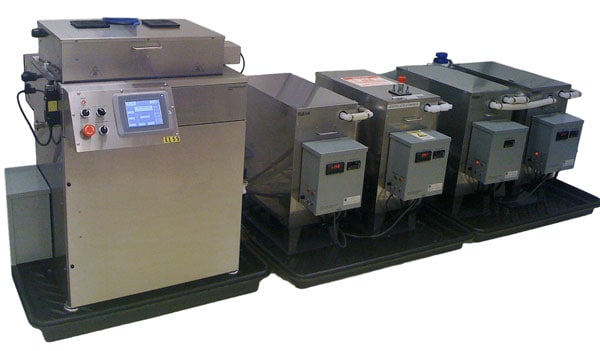
Automated Passivation Equipment

A passivation line may include cleaning, rinsing, passivation treatment, neutralization or additional rinse stages, and drying, depending on the process design. Material compatibility, bath maintenance, and handling methods all influence performance and day-to-day usability. At Best Technology we help manufacturers build a process that fits their parts, throughput goals, and compliance requirements.

Best Technology supports both chemicals and equipment passivation integration, providing a complete path from surface preparation through final finishing.

Why Choose Best Technology for Surface Finishing

Single-Source Solution

Surface finishing works best when the chemistry, the equipment, and the process requirements are planned together. Best Technology supports manufacturers with both chemical solutions and equipment integration, helping connect cleaning, finishing, rinsing, drying, and production flow into one process strategy. That gives customers a more practical path forward when they need to evaluate a finishing method, bring a process in-house, or improve consistency across an existing line.

Chemicals

  • CitriSurf Passivation Chemistry for Citric Acid Passivation
  • Electropolishing Solutions: Electrolyte Chemicals
  • Conversion Coating Chemistry

Technical Support and Process Guidance

Surface finishing is rarely just a matter of selecting a chemical. Process sequence, rinsing, bath control, part geometry, material compatibility, and validation requirements all influence the final outcome. Best Technology helps customers evaluate and optimize the entire process—not just the product being used. This approach is especially valuable for manufacturers working to improve corrosion resistance, meet stringent cleanliness standards, or confidently bring finishing processes in-house.

Industry Compliance Expertise

Many surface finishing applications are driven by customer specifications and industry standards, especially in aerospace, medical device, electronics, and precision manufacturing. Best Technology references widely recognized requirements such as MIL-DTL-5541 for chem film and ASTM A967 and AMS 2700 for passivation processes.

Ready to Find the Right Surface Finishing Process?

Choosing the right post-cleaning process depends on the metal type, performance requirements, industry specifications, and the way the process will be run in production. Whether you are evaluating passivation, electropolishing, or chem film, the goal is the same: select a finishing method that supports your part performance, process consistency, and compliance needs.

Best Technology helps manufacturers evaluate both the chemistry and the equipment required for successful surface finishing. If you need help identifying the right process for your application, contact our team for help.
Latest News & Products from Best Technology

BestSolv Novec Replacements

Running Out of 3M™ Novec™ Stock? How to Transition to Your BestSolv® Replacement Path

Don’t let running out of 3M™ Novec™ stock become a concern. As 3M™ Novec™ Engineered Fluids moved toward discontinuation, manufacturers took different approaches to maintaining process continuity. Some transitioned to alternative fluids, while others secured additional inventory and continued operating with the chemistry already qualified in their process. If your operation is still using remaining Novec™ stock, [...]

Read More

Read More

Trusted By Thousands of Customers Since 1992

  • BestSolv® Engineered Fluids: 3M™ Novec™ Replacement
    • BestSolv® Engineered Fluids
    • Solvent Cleaning with BestSolv® Engineered Fluids
      • BestSolv® Alpha
      • BestSolv® Bravo
      • BestSolv® Delta
      • BestSolv® Echo
      • BestSolv® Lima
      • BestSolv® Omega: PFAS-Free
      • BestSolv® Omega Plus: PFAS-Free
      • BestSolv® Sierra
      • BestSolv® Theta
      • BestSolv® Zeta: PFAS-Free
      • BestSolv® 5408: Boeing Spec BAC 5408 Qualified Cleaning Solvent
      • BestSolv® 7100
      • BestSolv® 7200
      • BestSolv® 7300
      • BestSolv® 71DA
      • BestSolv® 71DE
      • BestSolv® 71IPA
      • BestSolv® 72DA
      • BestSolv® 72DE
      • BestSolv® 73DE
      • BestSolv® nPB: TCE Replacement
      • Latent Fingerprint Processing with BestSolv® Engineered Fluids
      • What Are Hydrofluoroether (HFE) Fluids?
      • Film Cleaning with BestSolv® 7200
      • Oxygen System and Oxygen Gauge Cleaning Solutions
      • Carrier Fluids for Precision Deposition, Wetting, and Material Transport
      • Choosing the Best Vapor Degreaser Solvent
    • Thermal Management / Heat Transfer with BestSolv® Engineered Fluids
      • BestSolv® Zulu Immersion Cooling Fluid
      • BestSolv® Zulu MAG Magnesium Protection Fluid
      • BestSolv® Zulu FS Fire Suppression Fluid
      • BestSolv® 7100
      • BestSolv® 7200
      • BestSolv® 7300
      • BestSolv® 3283
      • BestSolv® 40
      • BestSolv® Fluids as Coolants for Specialized Machinery and Chiller Systems
      • Magnesium Cover Gas, Re-Engineered for Today
      • Gross Leak Testing for Hermetic Components and Critical Assemblies
  • PFAS-Free Next Generation
    • BestSolv® Omega: PFAS Free
    • BestSolv® Omega Plus: PFAS-Free
    • BestSolv® Zeta: PFAS-Free
    • PFAS-Free Cleaning Solvents for Vapor Degreasing Applications
    • BestSolv® HFO / HCFO Solvents for Precision Cleaning
  • 3M™ Novec™ Replacements
    • 3M™ Novec™ Replacement Fluids
      • 3M™ Novec™ 7100 Replacements
      • 3M™ Novec™ 7200 Replacement
      • 3M™ Novec™ 7300 Replacement
      • 3M™ Novec™ 71DA Replacements
      • 3M™ Novec™ 71DE Replacement Options
      • 3M™ Novec™ 71IPA Replacements
      • 3M™ Novec™ 72DA Replacements
      • 3M™ Novec™ 72DE Replacements
      • 3M™ Novec™ 73DE Replacement
      • Running Out of 3M™ Novec™ Stock? How to Transition to Your BestSolv® Replacement Path
  • 3M™ Novec™ Engineered Fluids and Fluorinert™ Liquids
    • 3M™ Novec™ Engineered Fluids
      • 3M™ Novec™ HFE Engineered Fluids and PFAS Phase Out
    • Solvent Cleaning with 3M™ Novec™ Engineered Fluids
      • 3M™ Novec™ 7100
      • 3M™ Novec™ 7200
      • 3M™ Novec™ 7300
      • 3M™ Novec™ 71DA
      • 3M™ Novec™ 71DE
      • 3M™ Novec™ 71IPA
      • 3M™ Novec™ 72DA
      • 3M™ Novec™ 72DE
      • 3M™ Novec™ 73DE
    • 3M™ Fluorinert™ Electronic Liquids for Thermal Management / Heat Transfer
      • 3M™ Novec™ 649
      • 3M™ Novec™ 7100
      • 3M™ Novec™ 7200
      • 3M™ Novec™ 7300
  • Solvent Phase Outs
    • 3M™ Novec™ HFE Engineered Fluids and PFAS Phase Out
    • nPB Replacement
    • TCE Replacement
    • Methylene Chloride Replacement
  • Aqueous Cleaning
    • Aqueous Cleaning Solutions: Alkaline Cleaners
    • How Clean is Clean?
  • Surface Finishing Chemicals
    • CitriSurf Passivation Chemistry for Citric Acid Passivation
    • Electropolishing Solutions: Electrolyte Chemicals
    • Conversion Coating Chemistry
      • Hex Chrome Phase Out and Alternatives for Conversion Coating
    • Surface Finishing Chemicals: Passivation, Electropolishing & Conversion Coatings
  • Process Equipment
    • Vapor Degreaser Equipment and Ultrasonic Vapor Degreasers
    • Ultrasonic Cleaning Systems & Parts Cleaners
    • Passivation Equipment for Stainless Steel
    • Electropolishing Equipment
    • Chromate Conversion Coating Equipment for Aluminum
Best Technology Inc.

Best Technology Inc.
14040 23rd Avenue N.
Minneapolis, MN 55447

phone icon612.392.2414

Follow Us
  • Facebook icon
  • X icon
  • LinkedIn icon
  • YouTube icon
  • Pinterest icon

Quick Links

  • Product Line Card
  • Case Studies
  • Videos
  • Site Map
  • Equipment Financing
  • Contact Us

Products

  • Industrial Parts Washers
  • Ultrasonic Cleaning Systems
  • Passivation Equipment
  • Electropolishing Equipment
  • Surface Finishing Systems
  • Chemistries, Solvents & Fluids

Industries Served

  • Medical Device
  • Aerospace
  • Electronics
  • Automotive
Contact an Expert

Copyright © 2026 · Best Technology Inc. · Privacy Policy

Precision Cleaning, Passivation & Finishing Systems
Contact an Expert
612.392.2414
  • facebook
  • Twitter
  • LinkedIn
  • YouTube
  • Pinterest

"*" indicates required fields

Contact us for info and pricing on fluids!